The breaks
Recognised, publicly known surf spots around Tahiti. Suitability depends on the day's swell, wind and tide, so treat the level as a guide, not a guarantee.
| Break | Type | Best for | Notes |
|---|---|---|---|
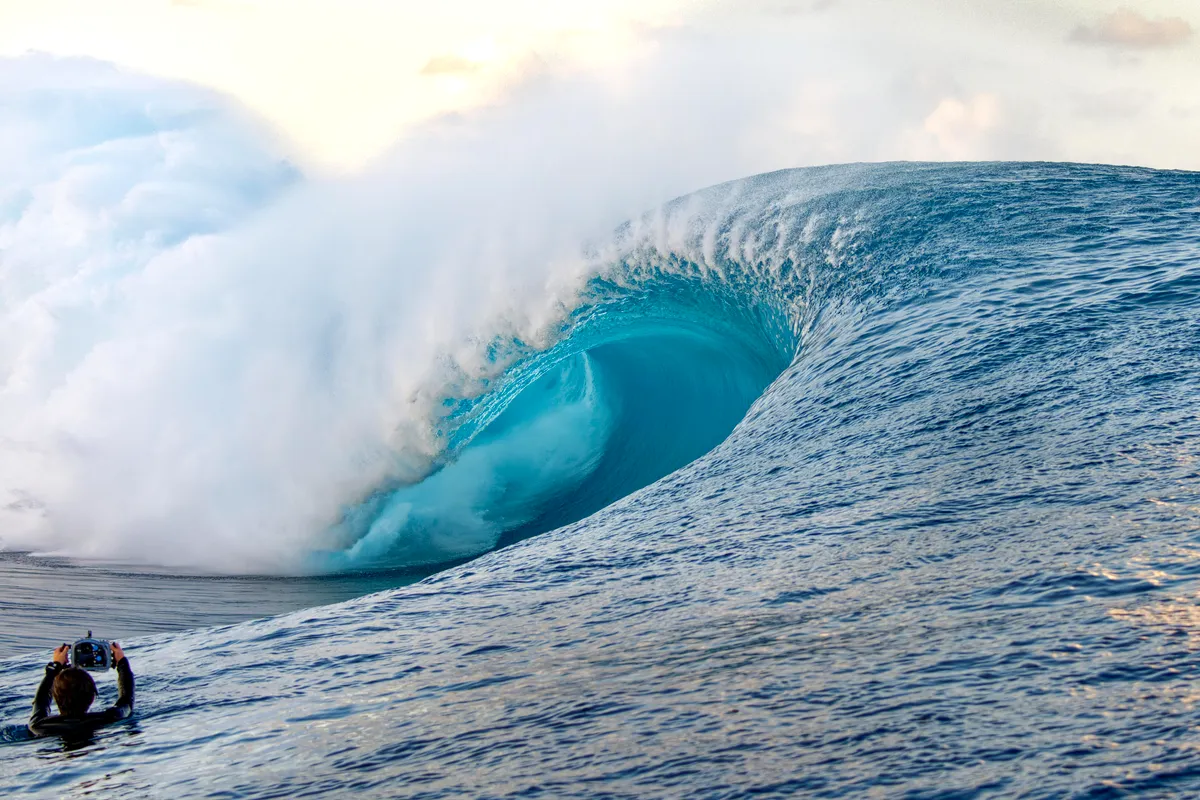
| Teahupo'o | Left-hand reef | Expert | Extremely heavy, hollow left over shallow coral at the end of the road on Tahiti Iti. Olympic venue; watch from a boat in the channel. |
| Papara | Beach break | Beginner–Intermediate | Black-sand beach break near a river mouth, popular with locals and surf schools. |
| Taapuna | Left-hand reef pass | Intermediate–Advanced | Reef pass near Punaauia on the west coast, reached by paddling or boat. |
| Papenoo | River-mouth beach break | Intermediate–Advanced | North-coast beach break that works on northern swells from November to March. |
Full profile: Teahupoʻo.
Tahiti surf climate, measured
Ten years of ocean model data for the open water off this coast: what the swell usually looks like before it reaches the beach. Shelter, sandbars and reefs change what you actually surf, so read this next to the month notes below.
| Month | Swell | Period | From | Wind | Water | Wetsuit | Days over 2.5 m |
|---|---|---|---|---|---|---|---|
| Jan | 1.7 m | 13 s | S | 18 km/h SE | 28°C | Boardshorts | 0% |
| Feb | 1.6 m | 12 s | S | 17 km/h E | 29°C | Boardshorts | 3% |
| Mar | 1.7 m | 12 s | S | 12 km/h E | 29°C | Boardshorts | 3% |
| Apr | 1.8 m | 13 s | S | 15 km/h E | 29°C | Boardshorts | 8% |
| May | 2.2 m | 14 s | S | 17 km/h E | 28°C | Boardshorts | 40% |
| Jun | 2.2 m | 13 s | S | 18 km/h E | 28°C | Boardshorts | 25% |
| Jul | 2.2 m | 12 s | S | 20 km/h E | 27°C | Boardshorts | 23% |
| Aug | 2.0 m | 12 s | S | 22 km/h E | 26°C | Boardshorts | 23% |
| Sep | 2.3 m | 13 s | S | 23 km/h E | 26°C | Boardshorts | 38% |
| Oct | 2.1 m | 13 s | S | 19 km/h E | 26°C | Boardshorts | 25% |
| Nov | 1.8 m | 13 s | SE | 20 km/h SE | 27°C | Boardshorts | 10% |
| Dec | 1.7 m | 12 s | S | 19 km/h E | 28°C | Boardshorts | 5% |
Median values from ERA5 at a sea point near Tahiti (18°S, 149.5°W), sampled 4 days a month at 12:00 UTC, 2015-2024. Highlighted months are our suggested planning window. Not a forecast or a safety assessment. How we use this data.
Book a surf trip to Tahiti
Everything we can link you to for this trip, grouped by what you need. Before you pay a camp or school, read who holds your money, and check that your insurance covers surfing.
Where to stay
Search near the breaks. Filter for surf hostels, apartments or hotels once you can see the map.
Surf lessons and activities
Listings change by season, so check what the operator includes and who coaches.
Flights
Add your dates and check the board fee on every leg before you pay.
Car hire
Ask about roof racks and whether the insurance covers boards on the roof.
Airport transfer
Tell the driver you have a board and its length when you book.
Mobile data
Download a forecast app and offline maps before you land.
Flight delay claims
If a delay eats your first surf day, check whether you can claim.
Luggage storage
Useful between check-out and a late flight. Check the size limit before dropping a board.
Links marked as partner links may earn us commission at no cost to you; the rest earn us nothing. We have not checked live availability or price, and the seller's terms apply. How we handle this.
Cheapest months to fly to Tahiti
Lowest return fare to PPT that Aviasales users found recently, in US dollars. Treat these as a guide to which months are cheaper, not as prices you can book today.
| From | Nov 26 | Dec 26 | Jan 27 | Mar 27 | Apr 27 | Jul 27 |
|---|---|---|---|---|---|---|
| London | – | $2197 | – | – | – | – |
| New York | – | $1465 | – | – | – | – |
| Los Angeles | – | $1132 | $1143 | $970 | – | – |
| Sydney | $1457 | $1060 | $964 | – | $912 | $766 |
| Frankfurt | – | $1851 | – | – | – | – |
Prices seen by 15 November 2026. Travelpayouts Data API. Board fees are extra on most airlines: see our surfboard baggage guide.
Why Tahiti matters in surfing
Tahiti is a volcanic island shaped like a figure of eight: the larger Tahiti Nui and the smaller Tahiti Iti peninsula, joined by a narrow isthmus. A fringing coral reef surrounds much of the island, with passes and reef edges where swells break. On the south and west coasts, swells from the Southern Ocean arrive in the southern winter; on the north coast, swells from the North Pacific arrive in the northern winter.
Wave-riding was part of Tahitian culture long before European contact, and today Tahiti has a strong surf community that has produced world-class surfers. The island is best known for Teahupo'o, a reef break of extraordinary power off Tahiti Iti that hosts elite professional events and was the venue for surfing at the Paris 2024 Olympic Games.
Polynesian surf heritage
Surfing, known in Tahitian as horue, was part of Polynesian life long before European explorers arrived in the eighteenth century. Early European accounts describe Tahitians riding waves on wooden boards and canoes. Missionary influence later suppressed many traditional practices, but surfing revived in the twentieth century and Tahiti now has a vibrant surf culture.
Tahitian surfers are known for their skill in heavy waves, and local watermen have played a key role in pioneering Teahupo'o and in water safety at professional events. Many surfers see Teahupo'o not just as a wave but as part of their community and identity, which is why the impact of events and development on the reef and the village is taken so seriously.
Teahupo'o
Teahupo'o breaks off the reef at the end of the road on Tahiti Iti's south-west coast. Deep water lies just outside the reef, so swells hit it with very little warning, producing thick, heavy, hollow waves that pitch over very shallow coral. On big days, it is one of the most dangerous waves in the world, ridden by professional surfers and big-wave specialists.
Teahupo'o is not a wave for visitors to attempt without serious experience. Most people watch from boats in the channel, which local operators run on good days. The village of Teahupo'o is small and quiet, and the community has strong ties to the wave. Ahead of the 2024 Olympics, local residents and environmental groups opposed the construction of a new judging tower because of concerns about damage to the reef.
Papara and the beach breaks
Papara, on Tahiti's south-west coast, is a black-sand beach break near a river mouth. It is one of the few beach breaks on the island and is popular with local surfers, bodyboarders and surf schools. On small days, it is good for learners; on bigger swells, it can become powerful with strong currents.
Papenoo, on the north coast, is a river-mouth beach break that works on northern swells, mainly from November to March. It can be powerful and is best for intermediate and advanced surfers.
Taapuna and the reef passes
Taapuna, near Punaauia on the west coast, is a left-hand reef pass that can produce quality waves for intermediate and advanced surfers. It is reached by paddling across the lagoon or by boat. Other passes around Tahiti and Tahiti Iti work on different swells.
Because most waves break over shallow coral, booties and caution are recommended. Ask local surfers about the best tide and entry for each pass.
Tahiti seasons and swell
The south and west coasts, including Teahupo'o, Papara and Taapuna, receive their best swells from roughly April to October, during the Southern Hemisphere winter. This is also the drier, more comfortable season.
The north coast, including Papenoo, works mainly from November to March, during the northern winter. This is the hotter, wetter season, with occasional tropical storms.
Where to stay in Tahiti
Many surfers stay on Tahiti Iti, near Teahupo'o, in family-run guesthouses called pensions or small hotels. It is quieter and closer to the southern breaks. Others stay near Papeete or on the west coast near Punaauia, closer to the airport, restaurants and Taapuna.
Tahiti is expensive, so pensions offer better value than resorts. Book ahead around professional events, when the area gets busy.
How to get to Tahiti
Faa'a International Airport near Papeete is the main gateway, with flights from Los Angeles, Paris, Auckland, Tokyo and other cities. Teahupo'o is about an hour to an hour and a half by road from the airport.
A rental car is the most practical way to get around Tahiti. Boats are needed to reach Teahupo'o's channel and other outer-reef breaks; go with experienced local operators.
Reef safety and what to pack
The water is warm all year, so boardshorts or a swimsuit with a rash vest are enough. Reef booties and a helmet can be useful at shallow reefs. Bring high-protection reef-safe sunscreen and a good first-aid kit for reef cuts, and clean any cuts carefully.
Currents in reef passes can be strong. Surf with others, follow local advice and never attempt Teahupo'o beyond your ability.
Beyond the surf in Tahiti
Watch the swell forecast carefully and plan around the coast that is working. On big days at Teahupo'o, take a boat trip to the channel to watch professional surfers up close.
On a rest day, explore Tahiti's interior valleys and waterfalls, visit the Papeete market, take the ferry to Moorea for hiking and lagoons, or snorkel in the lagoon. Polynesian food, from poisson cru to fresh fruit, is a highlight.
Tahiti surf season month by month
A broad planning picture, not a forecast. Swell, wind and water temperature vary from year to year.
| January | Northern swells for the north coast, including Papenoo. Hot and humid wet season. |
|---|---|
| February | Still the wet season, with northern swells and occasional tropical storms. |
| March | Transition month, with the first southern swells arriving. |
| April | The southern season begins. Teahupo'o and the south coast start to work. |
| May | Consistent southern swells and drier weather. |
| June | Prime southern swell season. Teahupo'o can be big and heavy. |
| July | Consistent swells and comfortable weather. |
| August | Peak season, often with professional events. Watch from the channel. |
| September | Still consistent southern swells and dry, comfortable weather on the south and west coasts. |
| October | The tail of the southern season, with occasional good swells before the wetter months begin. |
| November | Northern swells begin for the north coast. Wetter weather. |
| December | Northern swells for Papenoo and the north coast, with the holiday season and wetter weather. |
Learning to surf in Tahiti
Papara beach is the main learning spot in Tahiti, with a black-sand beach break and surf schools offering lessons with soft-top boards and rash vests. Some schools also use gentler reef breaks on smaller days with close supervision.
Ask about instructor qualifications, group size and which spots are used. Beginners should never attempt Teahupo'o or other heavy reef breaks; watch them from a boat instead.
Comparing options across the country? Read our guide to surfing in French Polynesia.
Seasonal notes on this page describe typical patterns, not the conditions on a given day. Use the local forecast, lifeguard advice and a qualified instructor for water-safety decisions, and get a written breakdown of what any surf package includes before paying.
Tahiti surf trip questions
Can beginners surf in Tahiti?
Yes, at Papara beach, a black-sand beach break with surf schools. Teahupo'o and most reef breaks are for experienced surfers only.
When is the best time to surf Teahupo'o?
April to October, during the Southern Hemisphere winter, brings the most consistent swells to Teahupo'o and the south coast.
Can I watch surfing at Teahupo'o?
Yes. Local boat operators take visitors to the channel next to the wave on good days, offering close views of the surfing.
How do I get to Teahupo'o?
Drive to the end of the road on Tahiti Iti, about an hour to an hour and a half from the airport, then take a boat to the channel.
Do I need a wetsuit in Tahiti?
No. The water is warm all year. A rash vest, reef booties and sun protection are recommended.
Where should I stay to surf in Tahiti?
Tahiti Iti, near Teahupo'o, suits surfers focused on the southern breaks. The west coast near Punaauia is closer to the airport and Taapuna.
Is Tahiti expensive for a surf trip?
Yes. Tahiti is one of the more expensive surf destinations. Family-run guesthouses called pensions are usually better value than resorts, and self-catering helps reduce costs.
What was the controversy over the Olympic judging tower at Teahupo'o?
Ahead of the 2024 Olympics, plans for a new aluminium judging tower on the reef drew protests from local residents and environmental groups concerned about damage to the coral. The tower plans were scaled back, and the debate highlighted the importance of protecting the reef.
Is there surf on Tahiti all year?
Yes. The south and west coasts are best from April to October, while the north coast works mainly from November to March.
What else is there to do in Tahiti?
Explore the island's waterfalls and valleys, visit the Papeete market, snorkel in the lagoon or take the ferry to Moorea.
Do I need a boat to surf in Tahiti?
For outer-reef breaks such as Teahupo'o, a boat is usually needed. Papara beach and some passes can be reached by paddling.
Sources & editorial notes
Destination context checked against the sources below. Base-selection and itinerary suggestions are Book & Surf editorial recommendations. Seasonal windows are broad planning suggestions, not measured forecasts or guarantees.
We do not claim to have personally surfed every break. Read our editorial standards.