Be a good guest. In the water and beyond.
A little awareness goes a long way on an unfamiliar coast.
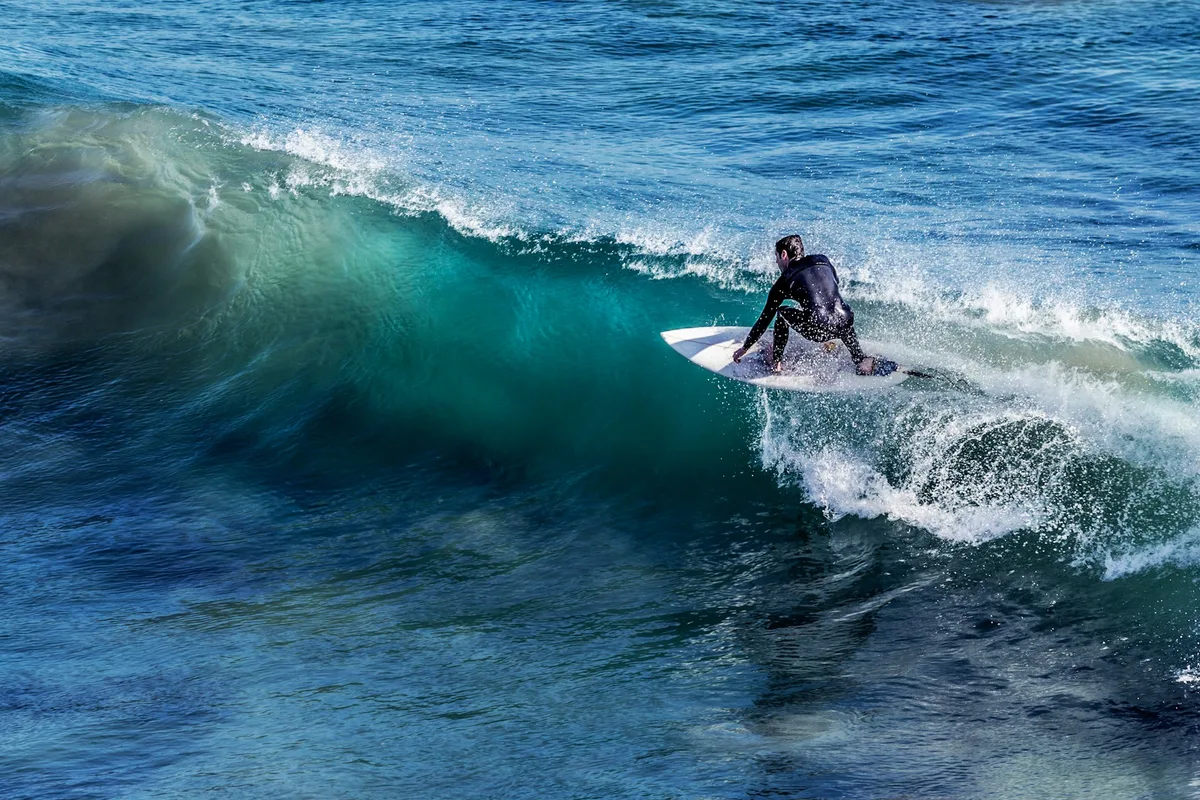
Watch before you join
Take time on shore to understand where people enter, where waves break and how surfers return to the lineup. Watch more than one set. If you cannot identify a safe route in and out, ask someone qualified locally or choose another activity. A crowded lineup can hide hazards rather than prove that a spot is easy.
Learn the local system
A common starting principle is that the surfer closest to the breaking part of the wave has priority, but local arrangements, peak shape and who is already riding all matter. Avoid dropping in on another surfer or paddling around them to take position. If you are unsure, ask politely and wait. A conversation is better than a collision.
Stay in control of your equipment
Choose a setting where you can manage your board and avoid other people. Leave enough space, do not rely on a leash as a substitute for control, and avoid paddling into someone’s path. If your lesson or skill level does not cover the conditions in front of you, the answer is a different session, not a more determined paddle.
Share the place, not just the wave
Use established paths, avoid blocking driveways and take litter away. A surf destination is also somebody’s home and workplace. Ask before photographing people, spend with local businesses and respect cultural expectations away from the beach. Being friendly does not entitle a visitor to every wave or every space.
Be thoughtful about what you publish
A public destination guide is different from broadcasting access to a sensitive or little-known break. Avoid sharing precise locations that could damage a place or overwhelm a small community. Ask whether a photograph or geotag helps the people who live there, not only the people following your trip.
Leave with a reason to be welcomed back
A good trip is not measured by how many waves you took. Make room for others, acknowledge mistakes and listen when local advice changes your plan. The best thing you can bring to an unfamiliar coast is curiosity backed by patience.
Keep exploring
These are editorial planning suggestions, not a substitute for local instruction or current conditions. How we write our guides.