The breaks
Recognised, publicly known surf spots around Sayulita. Suitability depends on the day's swell, wind and tide, so treat the level as a guide, not a guarantee.
| Break | Type | Best for | Notes |
|---|---|---|---|
| Sayulita right | Right-hand reef | Intermediate | Fun, peeling right over rocks near the river mouth, in front of town. The most popular and crowded wave. |
| Sayulita left | Beach break | Beginner–Intermediate | Softer beach break south of the reef, used by many surf schools. |
| La Lancha (Punta de Mita) | Right-hand reef | Intermediate | Reef break reached by beach path or boat, suiting intermediates. |
| El Anclote (Punta de Mita) | Point break | Beginner | Slow, gentle wave near the fishing village, perfect for longboarders and learners. |
| San Pancho | Beach break | Intermediate–Advanced | Powerful beach break with a steep shore break in a quieter town north of Sayulita. |
Sayulita surf climate, measured
Ten years of ocean model data for the open water off this coast: what the swell usually looks like before it reaches the beach. Shelter, sandbars and reefs change what you actually surf, so read this next to the month notes below.
| Month | Swell | Period | From | Wind | Water | Wetsuit | Days over 2.5 m |
|---|---|---|---|---|---|---|---|
| Jan | 1.1 m | 14 s | W | 13 km/h N | 26°C | Boardshorts | 0% |
| Feb | 1.0 m | 13 s | W | 11 km/h N | 25°C | Boardshorts | 0% |
| Mar | 1.0 m | 13 s | W | 10 km/h N | 24°C | Rash vest or 1 mm top | 0% |
| Apr | 1.0 m | 14 s | W | 10 km/h N | 25°C | Boardshorts | 0% |
| May | 1.1 m | 14 s | SW | 9 km/h N | 26°C | Boardshorts | 0% |
| Jun | 1.0 m | 15 s | SW | 7 km/h N | 28°C | Boardshorts | 0% |
| Jul | 0.9 m | 14 s | SW | 7 km/h NE | 30°C | Boardshorts | 0% |
| Aug | 0.9 m | 13 s | SW | 9 km/h NE | 30°C | Boardshorts | 0% |
| Sep | 1.0 m | 14 s | SW | 7 km/h NE | 30°C | Boardshorts | 0% |
| Oct | 0.9 m | 13 s | SW | 8 km/h NE | 30°C | Boardshorts | 0% |
| Nov | 0.9 m | 13 s | W | 9 km/h NE | 29°C | Boardshorts | 0% |
| Dec | 0.9 m | 14 s | W | 11 km/h N | 27°C | Boardshorts | 0% |
Median values from ERA5 at a sea point near Sayulita (20.75°N, 105.5°W), sampled 4 days a month at 12:00 UTC, 2015-2024. Highlighted months are our suggested planning window. Not a forecast or a safety assessment. How we use this data.
Book a surf trip to Sayulita
Everything we can link you to for this trip, grouped by what you need. Before you pay a camp or school, read who holds your money, and check that your insurance covers surfing.
Where to stay
Search near the breaks. Filter for surf hostels, apartments or hotels once you can see the map.
Surf lessons and activities
Listings change by season, so check what the operator includes and who coaches.
Flights
Add your dates and check the board fee on every leg before you pay.
Car hire
Ask about roof racks and whether the insurance covers boards on the roof.
Airport transfer
Tell the driver you have a board and its length when you book.
Mobile data
Download a forecast app and offline maps before you land.
Flight delay claims
If a delay eats your first surf day, check whether you can claim.
Luggage storage
Useful between check-out and a late flight. Check the size limit before dropping a board.
Links marked as partner links may earn us commission at no cost to you; the rest earn us nothing. We have not checked live availability or price, and the seller's terms apply. How we handle this.
Cheapest months to fly to Sayulita
Lowest return fare to PVR that Aviasales users found recently, in US dollars. Treat these as a guide to which months are cheaper, not as prices you can book today.
| From | Nov 26 | Dec 26 | Mar 27 |
|---|---|---|---|
| New York | – | – | $467 |
| Los Angeles | $481 | $576 | – |
Prices seen by 15 November 2026. Travelpayouts Data API. Board fees are extra on most airlines: see our surfboard baggage guide.
Why Sayulita is so popular
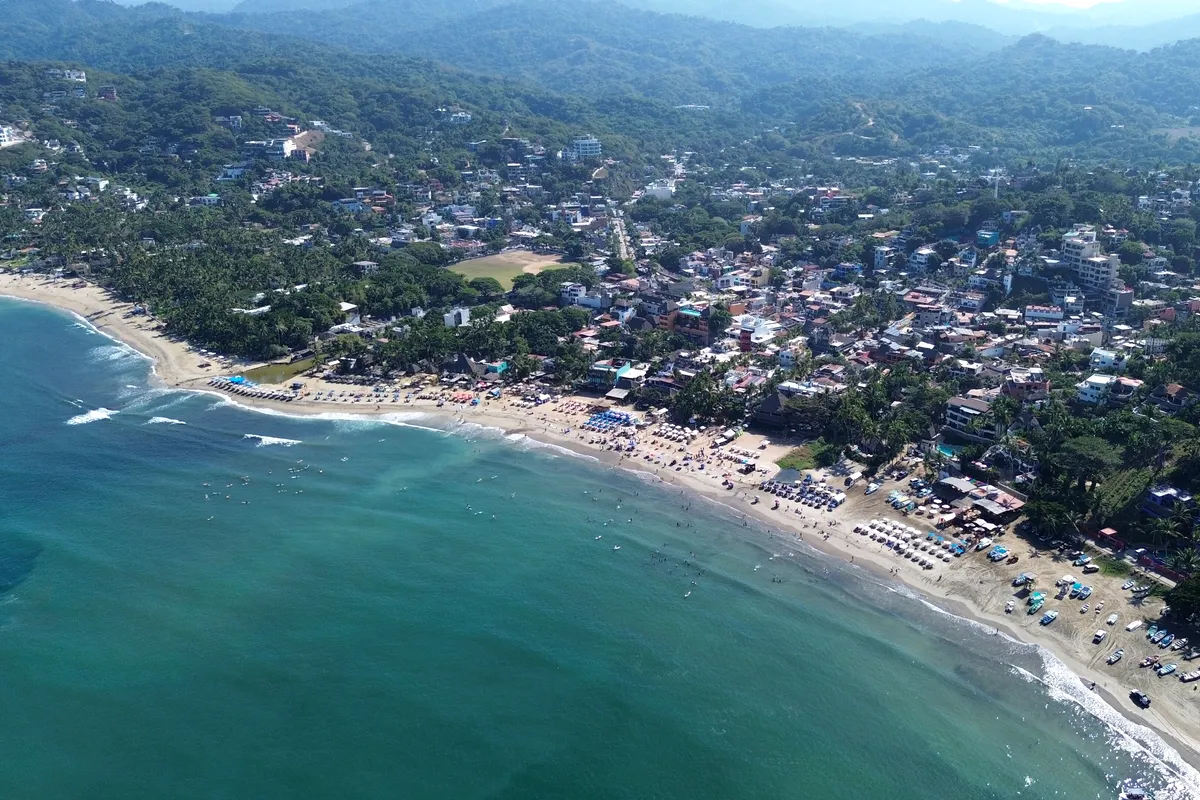
Sayulita sits on the Riviera Nayarit, the stretch of Pacific coast north of Puerto Vallarta. The town's main beach faces west into the Pacific, with a reef break at one end and a sandy beach break along the rest. The waves are generally friendly, the water is warm and the town has a relaxed, artsy atmosphere with colourful streets, taco stands, boutiques and a busy plaza.
It is one of Mexico's most popular places to learn to surf, with surf schools and board rental stands lining the beach. Its proximity to Puerto Vallarta's international airport makes it easy to reach, and it attracts a mix of surfers, families, yoga enthusiasts and long-stay travellers. The trade-off is that it is busy, especially in peak season.
The Sayulita right and left
The main surf spot is in front of the town. The right-hand reef, at the northern end near the river mouth, breaks over rocks and produces a fun, peeling wave that suits intermediates and longboarders. It is the most popular wave in town and can be very crowded.
The left, a beach break to the south of the reef, is often softer and is where many surf schools take beginners. On small days, it is gentle and forgiving; on bigger swells, it can become more powerful. Both waves are close to the plaza and the town's restaurants.
Punta de Mita
At the northern tip of Banderas Bay, about twenty to thirty minutes south of Sayulita, Punta de Mita has several point and reef breaks. La Lancha, reached by a beach path or by boat, is a right-hand reef that suits intermediates. El Anclote, near the fishing village, is a gentle, slow wave that is perfect for longboarders and learners. Other spots around the point, often reached by boat, work on different swells.
Punta de Mita has a mix of upscale resorts and a fishing village, with boat operators offering surf trips to the breaks.
San Pancho and the north
San Francisco, known as San Pancho, is a quieter town about ten minutes north of Sayulita. Its beach break can be powerful, with a steep shore break, and it suits intermediate and advanced surfers. The town has a relaxed, community-oriented atmosphere.
Further north, Lo de Marcos and other beaches offer more options and fewer surfers. A car or taxi makes it easy to explore.
Sayulita seasons and swell
The most popular time to visit Sayulita is from November to April, the dry season, when the weather is sunny and comfortable and north-west swells bring gentle to moderate waves. This is ideal for beginners and longboarders, although it is also the busiest season.
From May to October, south swells bring bigger, more consistent waves, especially to Punta de Mita and San Pancho. This is the hot, humid rainy season, with the risk of tropical storms and hurricanes. It is quieter and can be good for intermediate and advanced surfers.
Water quality
Sayulita has had well-publicised problems with water quality, particularly around the river mouth near the right-hand reef, where runoff and sewage have at times entered the ocean, especially after heavy rain and during busy periods. Local efforts to improve infrastructure are ongoing.
Check local advice and any posted advisories before surfing, avoid the water near the river mouth after rain and consider surfing at Punta de Mita or other nearby beaches if conditions are poor. Cover cuts and rinse off after surfing.
Safety: rips, rocks and sun
Sayulita's waves are generally friendly, but the beach can have rip currents, especially on bigger swells, and the right-hand reef breaks over rocks. Beginners should stay on the softer left with an instructor and keep clear of the reef. The beach is crowded in peak season, so board control and spacing are important.
The tropical sun is strong all year: wear a rash vest, reef-safe sunscreen and a hat, and drink plenty of water. During the summer rainy season, check forecasts for tropical storms and avoid the water near the river mouth after heavy rain. At San Pancho, the steep shore break can be powerful, so take care entering and leaving the water.
Where to stay in Sayulita
Staying in Sayulita town puts you close to the beach, restaurants, nightlife and surf schools. The town is compact and walkable but can be noisy and busy. Quieter accommodation is found on the hillsides and at the southern end of town.
San Pancho offers a calmer alternative, while Punta de Mita has luxury resorts and villas. Book ahead for the winter high season and holidays.
Puerto Vallarta to Sayulita: getting there and around
Puerto Vallarta's international airport is about forty-five minutes to an hour south of Sayulita by road, with flights from across North America and Mexico. Taxis, shuttles and local buses connect the airport and Sayulita.
In town, most places are walkable, and golf carts are a popular way to get around. Taxis and buses connect Sayulita with San Pancho, Punta de Mita and Puerto Vallarta.
Planning your days in Sayulita
Surf early, before the line-ups get busy and the wind picks up. Try the left for learning, the right for intermediates and take a boat trip to Punta de Mita for longboarding.
On a rest day, hike to nearby beaches such as Playa de los Muertos, take a boat trip to the Marietas Islands, known for their hidden beach and birdlife, or join a whale-watching trip in season. Puerto Vallarta's old town and malecón are a short drive away.
Sayulita surf season month by month
A broad planning picture, not a forecast. Swell, wind and water temperature vary from year to year.
| January | Dry, sunny high season with gentle north-west swells. Ideal for beginners; busy. |
|---|---|
| February | Comfortable weather and friendly waves. Whale-watching season. |
| March | Still dry and busy, with small to medium swells. Spring break crowds. |
| April | End of the dry season. Gentle waves and the first south swells late in the month. |
| May | South swells begin; heat and humidity increase. Quieter in town. |
| June | Rainy season begins, with bigger south swells. Good for intermediates at Punta de Mita. |
| July | Hot, humid and rainy, with consistent south swells. Tropical storm risk. |
| August | Bigger swells and rain. Water quality can drop after storms. |
| September | Wettest month, with high hurricane risk. Many visitors stay away. |
| October | Rain eases late in the month; swells still decent. |
| November | Dry season begins, with gentler waves and comfortable weather. |
| December | High season, busy holidays and friendly waves for learners. |
Learning to surf in Sayulita
Sayulita is one of Mexico's top spots for learning to surf, with gentle waves on the left beach break and dozens of surf schools and rental stands. Lessons typically include soft-top boards and rash vests, and many schools offer multi-day packages.
The dry season, from November to April, usually brings the gentlest conditions for beginners. El Anclote at Punta de Mita is another excellent learning spot, especially for longboarding.
Ask about instructor qualifications, group size and safety, and check water quality advice before your lesson.
Comparing options across the country? Read our guide to surfing in Mexico.
Seasonal notes on this page describe typical patterns, not the conditions on a given day. Use the local forecast, lifeguard advice and a qualified instructor for water-safety decisions, and get a written breakdown of what any surf package includes before paying.
Sayulita surf trip questions
Is Sayulita good for beginners?
Yes. The left beach break has gentle waves and many surf schools, and nearby El Anclote at Punta de Mita is excellent for learners.
When is the best time to surf in Sayulita?
November to April brings dry weather and gentle waves, ideal for beginners. May to October brings bigger south swells for more experienced surfers.
Is the water clean in Sayulita?
Water quality has been an issue, especially near the river mouth after heavy rain. Check local advice and avoid the river mouth after rain.
How far is Sayulita from Puerto Vallarta airport?
About forty-five minutes to an hour by road, depending on traffic. Taxis, shuttles and local buses connect the airport with Sayulita.
Do I need a wetsuit in Sayulita?
No. The water is warm all year. A rash vest is useful for sun protection.
Where can I longboard near Sayulita?
El Anclote at Punta de Mita is a slow, gentle wave perfect for longboarding, and the Sayulita right is popular with longboarders on smaller days.
Is San Pancho good for beginners?
Not usually. San Pancho's beach break can be powerful with a steep shore break. Beginners are better off at the Sayulita left or El Anclote at Punta de Mita.
Is Sayulita crowded?
Yes, especially from December to April. The right-hand reef and the left beach break can be very busy; early mornings are quieter, and Punta de Mita offers alternatives.
Can I take a boat to surf from Sayulita?
Yes. Boat operators in Punta de Mita run trips to breaks around the point, including spots that are hard to reach on foot.
Sources & editorial notes
Destination context checked against the sources below. Base-selection and itinerary suggestions are Book & Surf editorial recommendations. Seasonal windows are broad planning suggestions, not measured forecasts or guarantees.
We do not claim to have personally surfed every break. Read our editorial standards.